1997 Chevy Silverado 4WD Actuator Location and What to Check
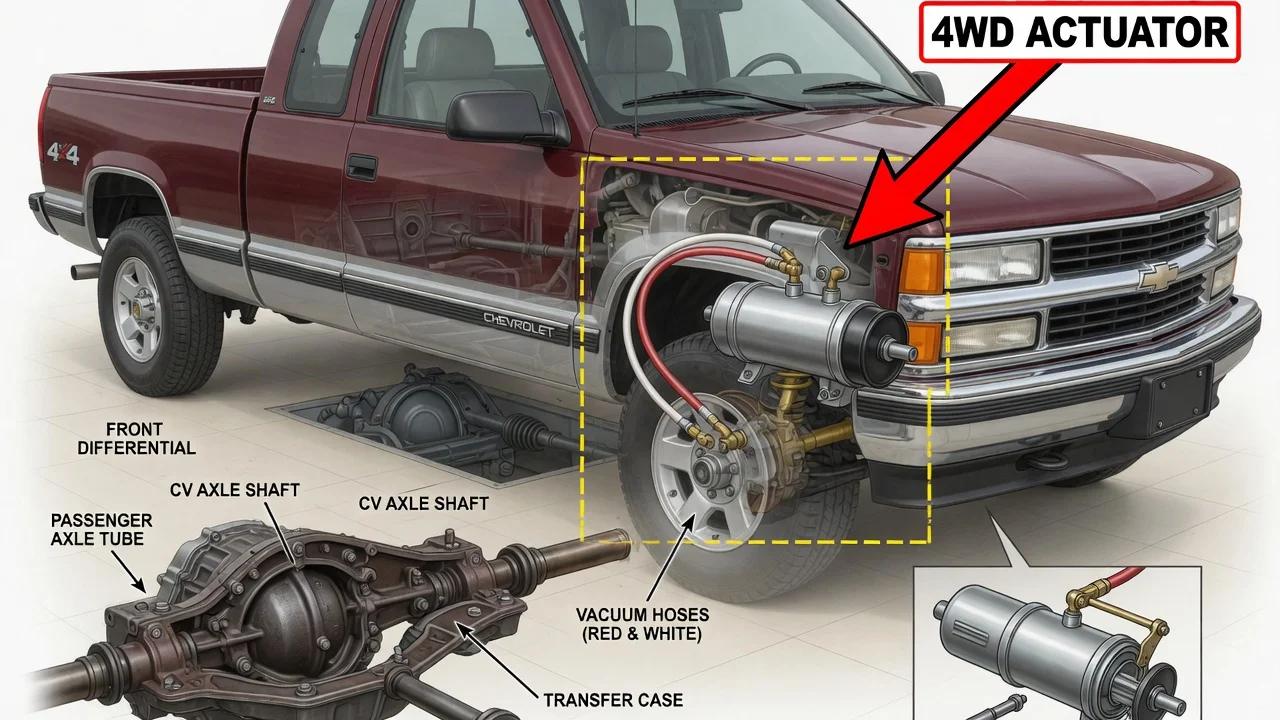
When a 1997 Chevy Silverado shifts into four-wheel drive but the front wheels never pull, the front axle actuator is one of the first parts a mechanic looks at. Owners usually search for its location because they want to check the wiring or confirm a failed part before buying one. This guide explains where the actuator sits on the four-wheel-drive K-series truck, what it does, which versions differ, and what you can check yourself.
Where the 4WD actuator is located
On a 1997 Silverado with four-wheel drive, the front axle actuator sits on the front differential, on the passenger side. Look under the truck behind the right front tire. The front differential carrier sits near the center of the frame, and a tube runs from its right side toward the passenger wheel. The actuator threads into the housing where that tube meets the carrier. It is a small cylindrical part with an electrical connector on the end, roughly in line with the axle tube.
Most owners can see it from underneath with the front of the truck safely supported. Some trucks have a skid plate, a buildup of road grime, or a wiring harness clip in the way, so you may need to clean the area before you can see the connector. The actuator is not inside the cab, behind the dashboard, or on the wheel hubs, which is where people sometimes look first.
How the front axle actuator works
This generation of Chevy full-size pickup uses a front axle disconnect system instead of locking hubs. In two-wheel drive, the passenger-side front axle shaft is uncoupled from the differential, so the front driveline is not fully turning with the wheels. When you select four-wheel drive, a sliding collar inside the axle housing locks the passenger-side shaft to the differential output. That connects both front wheels to the transfer case.
The actuator moves that collar. On these trucks it is an electrically heated unit rather than a quick motor. When the transfer case is shifted into four-wheel drive, a switch at the transfer case sends battery voltage to the actuator. An internal heating element warms a material that expands and pushes a plunger, which moves the shift fork and collar. Because it relies on heat, engagement is not instant, and the collar may need slight wheel movement to line up its splines. The actuator also contains a switch that tells the dash indicator when the front axle has engaged.
Configurations that change the answer
The answer above applies to four-wheel-drive K-series trucks with independent front suspension. A two-wheel-drive C-series Silverado has no front axle actuator at all. Model year naming also matters: the 1997 truck belongs to the older full-size generation, while the redesigned Silverado that arrived for the 1999 model year uses a different front axle and actuator design. If parts listings or videos show a different-looking unit, confirm which generation they cover.
The transfer case is a separate question. Trucks with a floor-mounted shift lever change ranges mechanically, and the lever position controls the switch that powers the front actuator. Trucks equipped with dashboard push buttons use an electric shift motor mounted on the rear of the transfer case. That motor is sometimes also called a 4WD actuator, so check how your truck shifts before deciding which part you need. Heavy-duty versions and trucks with modified or swapped front axles may also differ, so the exact vehicle configuration should guide the search.
Checks an owner can do
Start with simple observations. Note whether the 4WD indicator lights up, whether the transfer case engages, and whether the front wheels drive on a loose surface. A truck that shifts into four-wheel drive but behaves like a rear-drive truck points toward the front axle side. Rolling forward or backward slowly for a short distance after selecting four-wheel drive can help the collar align, since the actuator needs time to heat and move.
For an inspection, park on level ground, set the parking brake, and support the truck on jack stands rather than a jack alone. Find the actuator on the passenger side of the front differential and look for a damaged connector, corroded terminals, broken wires, or a harness that has rubbed on the frame. Check the relevant fuse listed in the owner manual or fuse panel cover. With a test light or multimeter, you can check whether the connector receives voltage when the key is on and four-wheel drive is selected. If voltage is present but the axle does not engage, the actuator or internal shift parts are more likely at fault. If there is no voltage, follow the circuit back toward the transfer case switch.
If you replace the actuator, a small amount of gear oil may escape when it is removed, so check the front differential fluid level afterward and refill it to the manufacturer specifications. Your service history can also help. A previous fluid service, an aftermarket part, or earlier wiring repairs may explain a new symptom.
Limits and when to get help
A working actuator does not guarantee a working front axle. A worn shift fork, damaged collar, worn splines, or problems in the transfer case or front driveshaft can cause the same symptoms. Grinding or clunking noises during engagement, metal particles in the differential fluid, or a vehicle that will not leave four-wheel drive deserve a closer look before the truck is driven hard or in demanding operating conditions.
Wiring colors, connector styles, and fuse assignments can vary by build, so a factory service manual for your exact truck is the most reliable reference for diagnosis. If voltage checks are unclear, the indicator behaves inconsistently, or the axle housing needs to be opened, a shop with experience on this generation of Chevy truck can confirm the cause and keep the repair within your regular maintenance schedule.