1996 Toyota Tacoma Fuel Filter Location and Replacement
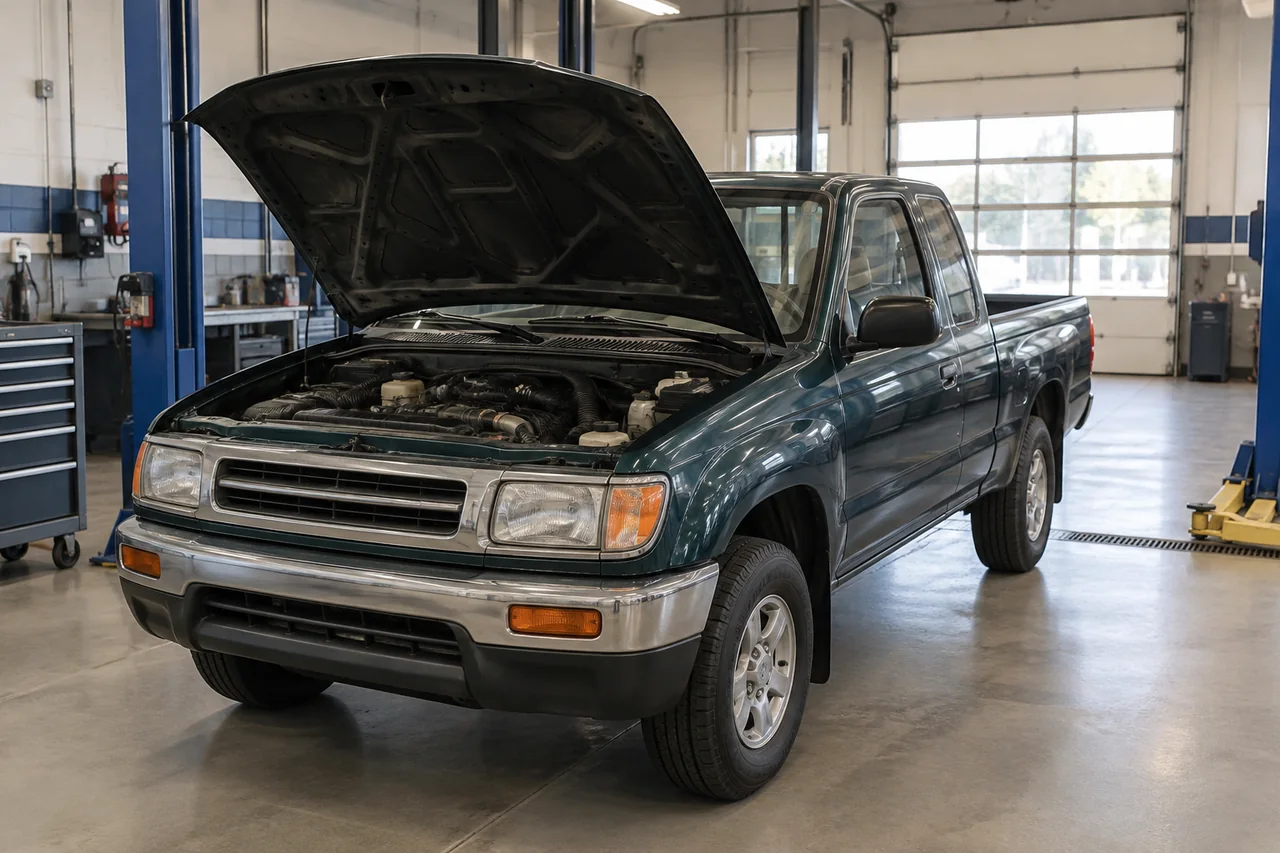
Finding a 1996 Tacoma fuel filter is not a one-layout task. First-generation trucks used more than one engine, and the fuel filter location, access route, and replacement filter depend on that configuration. Confirm engine identification from the underhood emissions label and the owner's documents, then use matching service information before you look under the truck. Fuel line fittings, residual fuel system pressure, and a careful fuel leak inspection matter as much as finding the canister itself.
Identify Your Tacoma’s Engine Before Locating the Filter
A 1996 Tacoma's engine identification starts with the underhood vehicle emission control information label and the documents that came with the truck. Those sources typically name the engine family and related fuel system notes that distinguish one first-generation layout from another. Until that configuration is known, treating any online photo or generic truck diagram as the fuel filter location is guesswork. Service information written for that engine should be opened next, because it is what confirms where the filter is mounted and how it is reached, not a walk-around that assumes every 1996 Tacoma is the same.
Model year identifies the first-generation Tacoma platform, not the exact mounting position, access route, or replacement filter. Different engines can place the inline filter on a different section of the frame or along a different run of fuel line, and they can use different fittings and sealing hardware. Cab, bed, and four-wheel-drive packaging can also change what you can see and reach from above or from the side. Confirming the engine in applicable service information before describing access keeps the owner from loosening the wrong component or buying a filter that does not match the truck.
Locate and Recognize the Fuel Filter
Once the engine-specific service information is in hand, the confirmed fuel filter location is found by following the fuel lines from the tank toward the engine and looking for the inline canister they describe. That canister is a dedicated body in a mounting bracket, with fuel line fittings at each end rather than a single clamp on a random hose. Nearby items such as a vapor canister, frame brace, or shock mount can look similar until both lines are traced and the bracket is matched to the illustration for that configuration.
With the engine off and cool, an owner can look from a safe vantage without loosening fittings or disturbing fuel lines. Wetness, staining, or a strong fuel smell around the filter body or connections is a reason to stop rather than to probe further. Some first-generation Tacoma layouts place the filter where a skid plate, frame member, or bed overhang limits a clear view and a stable working position. Restricted access, rusted brackets, or fittings that cannot be fully seen make inspection and replacement more appropriate for a service shop than for a driveway job.
Decide Whether Replacement Addresses the Complaint
Hesitation, reduced power, and starting difficulty can come from ignition, air metering, fuel pump delivery, contaminated fuel, or a restricted filter, so those complaints do not prove the 1996 Tacoma fuel filter has failed. A clogged filter can contribute to stumble under load, yet the same feel appears when pressure is low for other reasons. Scheduled replacement as documented maintenance is a different decision from swapping the filter to chase an unconfirmed running problem. Treat a shop recommendation based on age and service history as one path, and treat a drivability complaint as a diagnosis question until delivery is tested.
When the complaint is a running problem rather than documented filter service, professional fuel system pressure and delivery testing decides whether a replacement filter is relevant. A gauge reading at the specified test point, compared with that engine's service information, can show whether the pump, regulator, or a restriction is involved. Fuel odor or visible wetness around the filter, lines, or tank is a different issue: stop inspecting, do not start or drive the truck, and have the leak assessed. Residual pressure can keep fuel at the fittings even after the key is off.
Confirm the Part and Understand the Replacement Process
Confirm the replacement filter with the same engine information used to locate it, then check VIN-based fitment so the canister, flow orientation, and any specified sealing hardware match that 1996 Tacoma. A visually similar filter from a related Toyota pickup can still use different fuel line fittings or a different mounting bracket. The fuel system holds residual pressure after shutdown, and liquid fuel plus ignition sources create a fire hazard around the work area. Do not treat a cold engine as an empty, unpressurized system, and do not open fittings from a tutorial that is not the vehicle-specific procedure.
A professional replacement sequence stays at a high level: verify the application, make the fuel system safe using the truck's service procedure, install the replacement filter with the specified hardware and orientation, then inspect the finished installation for leaks and correct routing. Fitting style, bracket fasteners, and sealing parts vary, so that outline is not a substitute for vehicle-specific steps. Damaged fuel line fittings, corrosion on the lines or bracket, restricted access under the bed or frame, and uncertain sealing requirements are reasons to leave the job to a shop rather than force a frozen connector.
Check the Repair and Address Persistent Symptoms
After a 1996 Tacoma fuel filter is replaced, a technician should verify sealing and normal operation before the truck is returned to use. That check includes the new connections, a secure mounting bracket, and how the engine starts and idles, without treating one start as proof that delivery is restored under load. Once home, safe owner observations are a new fuel odor, visible drips at the filter or along the lines, harder starting than before, and whether the original hesitation or power loss remains. Those notes belong with the shop, not with a driveway attempt to retighten fittings.
If fuel odor or leakage appears after service, stop operating the truck and arrange assistance rather than driving it to air out or waiting to see whether the smell fades. A fuel leak inspection at that point is a safety step, not a second chance to inspect the filter yourself. Persistent hesitation, reduced power, or starting trouble after a confirmed good installation means the original complaint was never isolated to the filter. Repeating the replacement will not substitute for pump, pressure, ignition, or intake diagnosis, and another filter will not correct a leak at a damaged fitting.