Identifying a 1996 Dodge Ram 1500 Transmission Shift Solenoid
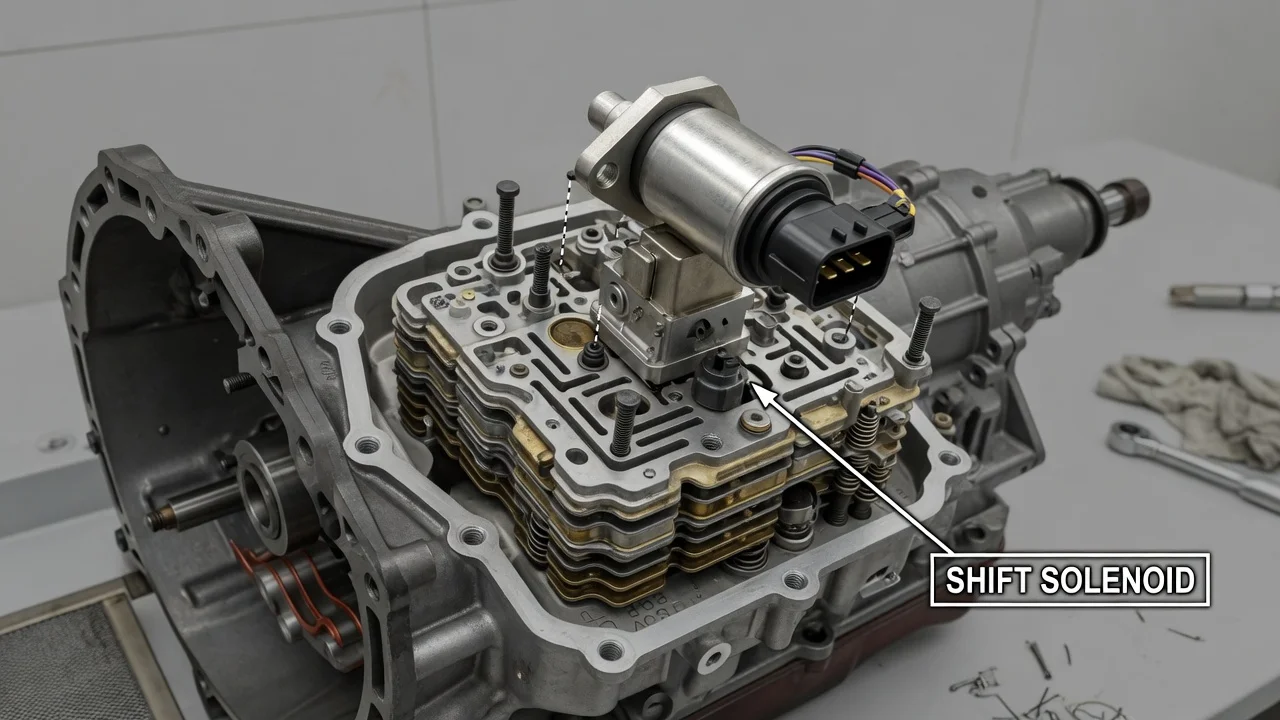
Owners looking for a shift solenoid on a 1996 Dodge Ram 1500 often expect one solenoid for each gear change. This truck's automatic does not work that way. Before you buy parts, confirm which transmission is installed and which electrical components control its shifts. It also helps to know what a symptom can and cannot tell you about a failed part.
The short answer
Most 1996 Ram 1500 trucks with an automatic use a Chrysler four-speed from the RE family, typically the 42RE or 46RE depending on engine and build. These units have no individual solenoids for first, second and third gear. The valve body makes those shifts hydraulically, using governor pressure that the engine computer controls electronically. When owners say shift solenoid, they usually mean one of two parts. The first is the overdrive and torque converter lockup solenoid assembly, which controls the 3-4 shift and converter clutch. The second is the governor pressure solenoid, which works with a governor pressure sensor to regulate the 1-2 and 2-3 shifts. Both parts sit inside the transmission and are reached by removing the oil pan. Trucks with a manual transmission have no shift solenoids at all.
How shifting works in these transmissions
Earlier RH versions of this transmission used a mechanical governor on the output shaft. It produced pressure that rose with road speed and pushed the shift valves to upshift. The RE design replaced that mechanism with a governor pressure solenoid. The powertrain control module pulses the solenoid to create the pressure, and a governor pressure sensor reports the actual value back. The module decides what pressure to command from vehicle speed, throttle position and other inputs. As a result, the lower shift points come from a mix of software and hydraulics rather than from one switching solenoid.
The overdrive and lockup solenoids are combined in one assembly mounted on the valve body. When the module energizes the overdrive solenoid, fluid is routed to engage fourth gear. The lockup solenoid applies the torque converter clutch so the engine and transmission turn together at steady cruise. The overdrive-off switch lets the driver block fourth gear. A fault in this assembly or its circuit usually affects only fourth gear and converter lockup. A governor pressure fault tends to show up in the lower shifts instead. That split is the most useful starting point for diagnosis. However, wiring, connector, fluid or valve body problems can produce the same shift behavior.
What changes the answer
Configuration matters first. The engine choice, from the 3.9-liter V6 to the 5.2- and 5.9-liter V8s, affects which transmission type the truck left the factory with. Service history can change that, because many trucks this age have a rebuilt or used replacement unit that may not match the original build. Check the identification number stamped on the transmission case and any rebuild paperwork rather than relying on the model year alone. Parts catalogs may ask for the transmission model and build information. Solenoid assemblies and governor components can differ between years in connector style or valve body fit, so confirm fitment against your actual unit.
Operating conditions also affect what counts as normal. The control module may hold off overdrive and converter lockup until the fluid warms up, so a cold truck that skips fourth gear for the first few minutes is not necessarily faulty. Pressing the brake pedal normally releases lockup. Fluid specification matters too. These transmissions were designed for Chrysler ATF+ type fluid, and ATF+4 is the current replacement commonly specified for them. Confirm the requirement in the owner's manual or a parts reference. Low, burnt or incorrect fluid can cause harsh, slipping or delayed shifts that look like a solenoid problem.
What the owner can do
Start with the fluid. Check the level with the engine running and the fluid at operating temperature, following the procedure in the owner's manual. Note the color and smell, and look for leaks at the pan and case connectors. Then record the shift behavior on a test drive. Does the truck upshift from first to second and second to third at reasonable speeds? Does it reach overdrive? On light throttle at highway speed, do you see a small rpm drop as the converter locks up? Write down whether problems appear cold or hot and whether they come and go.
Next, read the diagnostic codes. The 1996 model year uses the OBD-II connector, so a basic scanner can connect to the truck. Transmission-specific codes and live governor pressure data may require a tool with Chrysler enhanced coverage. Comparing commanded and actual governor pressure helps separate a solenoid fault from a sensor, wiring or hydraulic fault. Inspect the transmission case connectors for fluid wicking, bent pins, corrosion and chafed wiring. A bad connection can mimic a failed solenoid.
Repair options depend on what testing shows. If the evidence points to the overdrive and lockup solenoid assembly or the governor components, replacement involves dropping the pan and servicing the filter. Refill with the correct fluid afterward. With the pan off, check for debris. Heavy clutch material or metal suggests internal wear that a new solenoid will not fix. Depending on findings, the right repair may be a wiring repair, a valve body service or a transmission rebuild rather than a solenoid.
Limitations and next step
A symptom alone cannot confirm that any specific part has failed, because electrical, hydraulic and mechanical faults overlap on this transmission. Resistance specifications, bolt torque values and test procedures are vehicle-specific and belong in the factory service manual for your truck and transmission. Get professional help in any of these cases: the truck slips, will not move, has burnt fluid, or keeps resetting codes after repair. The same applies if you cannot read governor pressure data. The practical next step is to identify the installed transmission, read the stored codes and confirm the fault before ordering a solenoid.