Replacing the Brake Booster on a 1995 Ford Mustang
The Short Answer
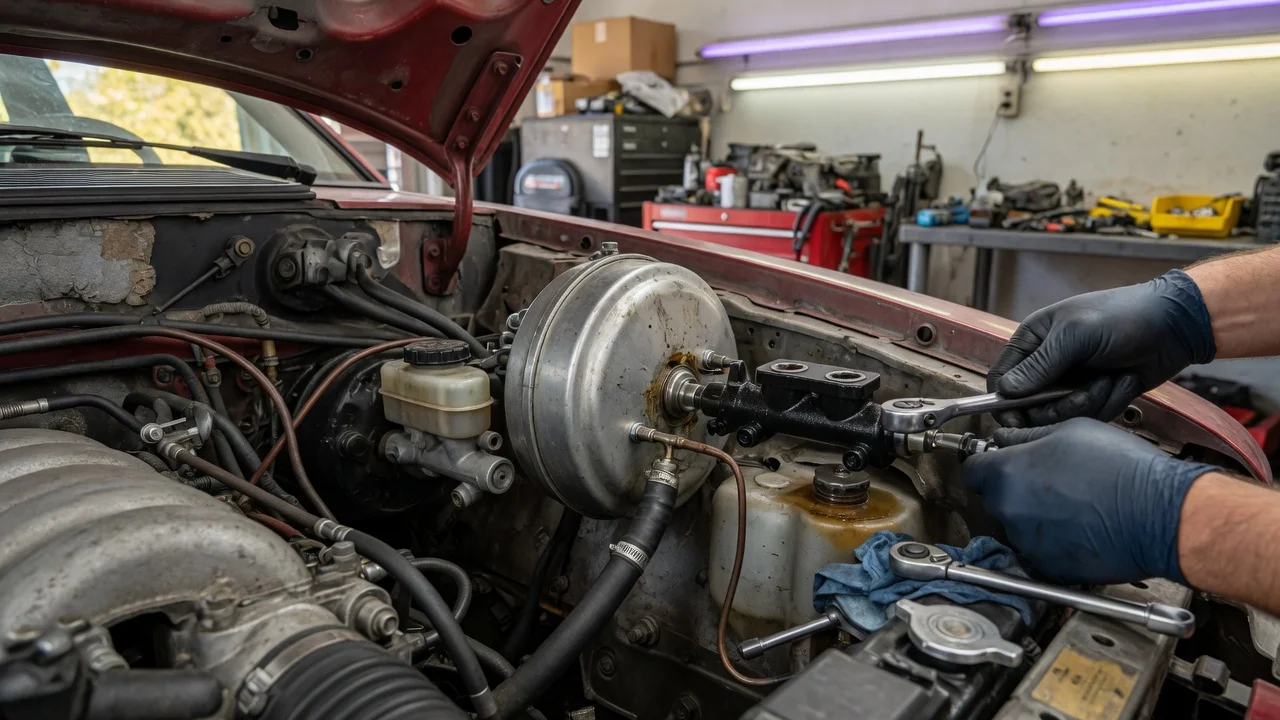
On a 1995 Mustang, the brake booster is the round vacuum canister mounted to the driver-side firewall, between the brake pedal assembly inside the cabin and the master cylinder in the engine bay. Replacing it is a bolt-off, bolt-on job. You separate the master cylinder from the front of the booster, disconnect the booster pushrod from the brake pedal under the dash, remove the nuts that hold the booster to the firewall, and install the new unit in reverse order.
Three things affect whether you need to do this job and how it goes: whether the booster is actually the failed part, which booster fits your car's configuration, and whether the brake lines get disconnected during the swap. Each is covered below.
Which Cars This Applies To
The 1995 model year belongs to the SN95 generation of the Mustang, which began in 1994. That year was offered with a 3.8-liter V6 in base models and a 5.0-liter V8 in the GT and in the SVT Cobra. Booster part numbers can differ by engine, by model (such as Cobra versus GT), and by whether the car has anti-lock brakes. Confirm fitment against your VIN or the build details in a parts catalog before buying, rather than assuming one booster fits every 1995 Mustang.
Confirm the Booster Is the Problem
A vacuum brake booster uses engine vacuum to multiply the force you apply at the pedal. When it fails, braking still works mechanically, but it takes much more pedal effort. Common signs include:
A hard, high brake pedal that needs unusual force to stop the car; A hissing sound from under the dash when the pedal is pressed; Engine idle that stumbles or changes when you apply the brakes, which can indicate a vacuum leak through the booster diaphragm
A basic check: with the engine off, pump the pedal several times to use up the stored vacuum. Then hold steady pressure on the pedal and start the engine. On a working booster, the pedal should sink slightly as vacuum assist comes in. If it doesn't, inspect the cheaper parts before condemning the booster. Check the vacuum hose to the booster for cracks or loose connections, and check the one-way check valve where the hose enters the booster. A failed hose or check valve can produce the same hard-pedal symptom.
Choosing a Replacement
Replacement boosters are sold new and remanufactured. Whichever you choose, match it to your car's engine, model and ABS status, and compare the mounting pattern and pushrod against the original before installation. Some remanufactured units come without the check valve or grommet, so check what's included and whether you need to reuse your old parts.
General Replacement Sequence
The outline below shows the typical order of work for a firewall-mounted vacuum booster. Fastener locations, access steps and torque values for the 1995 Mustang should come from a factory service manual or an equivalent repair manual.
Disconnect the vacuum hose from the booster check valve. Unbolt the master cylinder from the front of the booster. If possible, leave the brake lines attached and carefully ease the master cylinder forward and away, without kinking the lines. Under the dash, disconnect the booster pushrod from the brake pedal. Note how the brake light switch and any clips or bushings are arranged at this connection, since on many Ford designs of this era the switch sits at the pedal pin. Remove the nuts that secure the booster to the firewall, usually reached from inside the cabin, then lift the booster out from the engine bay. Install the new booster, reconnect the pedal pushrod with the brake light switch and retainers in their original positions, remount the master cylinder, and reconnect the vacuum hose. Check the brake lights and pedal feel before driving, and repeat the engine-off/engine-on pedal test.
Brake Bleeding and Pushrod Adjustment
If the brake lines stayed connected and the master cylinder reservoir never ran low, the hydraulic system generally stays sealed and does not need bleeding. If you opened any lines or let air into the master cylinder, bleed the brakes before driving.
The length of the output pushrod between the booster and the master cylinder matters. If it's too long, the brakes can drag. If it's too short, pedal travel increases. Some replacement boosters are adjusted at the factory, while others need to be checked with a gauge. Follow the booster manufacturer's instructions or the service manual procedure.
What This Guide Doesn't Cover
This guide does not include part numbers, torque specifications, pushrod gauge dimensions or vacuum readings for the 1995 Mustang. It also does not confirm exactly how booster fitment differs between the V6, GT and Cobra, or between ABS and non-ABS cars. Get those details from a factory service manual and a VIN-specific parts lookup before you start. Because the brakes are a safety-critical system, have a qualified technician inspect the work if you're unsure about any step.