1990 Toyota Pickup Bed Replacement: Fitment and Replacement Planning
Direct answer
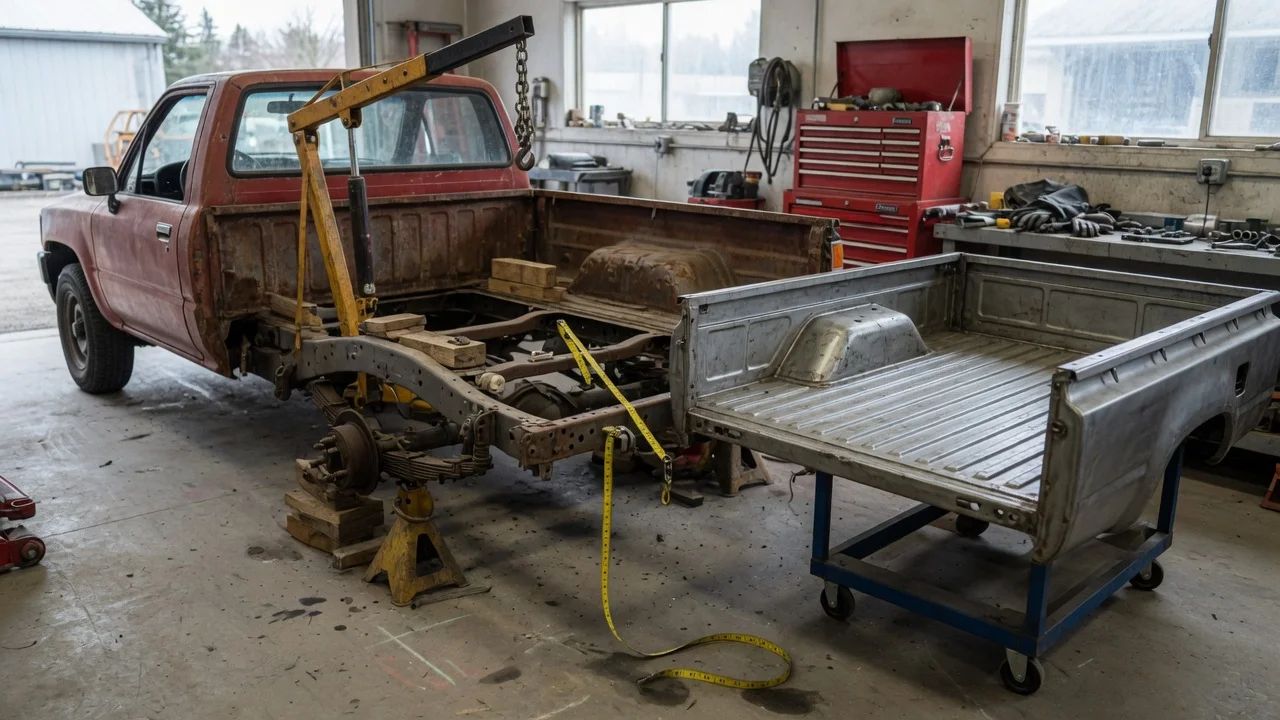
A 1990 Toyota Pickup can take a replacement cargo bed. The box is a separate, frame-mounted body piece, so a worn, rusted, or crash-damaged bed can be unbolted and a matching used, reproduction, or aftermarket box installed. Fitment is configuration-specific. The donor must match the truck’s cab style, bed length, and the late-compact-pickup generation that includes the 1990 model year, and it must line up with fuel-filler, tail-lamp, bumper, and wheel-well geometry. North American trucks of this year were sold as the Toyota Pickup; related Hilux models in other markets are not automatically interchangeable without checking mounts and openings. Exact bed lengths, bolt patterns, torque values, and a complete year-by-year interchange chart are not established in the material for this article and should be confirmed on the vehicle and the replacement box before purchase or cutting.
What the 1990 Pickup covers
In the United States and Canada, 1990 sits in the compact Toyota pickup generation that ran from the late 1980s into the mid-1990s, before the Tacoma nameplate. That generation was offered in regular-cab and extra-cab (Xtracab) body styles, with two-wheel-drive and four-wheel-drive chassis, and with more than one cargo-box length. Trim, engine, and transmission do not usually define bed shape, but cab length and drivetrain layout do. A bed that fits a regular-cab long-box 2WD truck will not automatically fit an Xtracab short-box 4WD truck even if both are 1990 Toyotas. Claims about any 1990 Toyota truck bed should be treated as incomplete until cab, box length, and 2WD or 4WD are identified.
What must match for fitment
Start with the truck you have, not with a listing title. Record cab style, whether the chassis is 2WD or 4WD, current box length class (short or long), fuel-filler side and height, and how the bumper, license lamp, and tail lamps attach. Then compare the replacement the same way.
Cab and box pairing is the first filter: extra-cab trucks commonly used a shorter box than regular-cab long-bed trucks. Mixing cab and box lengths changes rear overhang, bumper position, and how the bed sits relative to the cab. Beds from the same North American compact-pickup generation as 1990 are the first place to look. Earlier 1980s boxes and later Tacoma boxes are different vehicles for planning purposes until mounts, width, and openings are proven identical on both parts.
Drivetrain and filler routing also have to match. 2WD and 4WD frames can differ in ride height, wheelarch shape, and fuel-filler path. A mismatch shows up as a filler neck that will not meet the tank hose, a wheel opening that does not clear the tire, or stake-pocket and taillight holes that do not line up. Japanese-market or other-region boxes may use different lamp housings and harness plugs; plan to reuse the original lamps and harness if the donor lighting does not match. Spray-in liner, wood floor, tool box, gooseneck or hitch cutouts, and stake-pocket accessories travel with the box. They do not change bolt-on fit, but they change what you are buying.
Because a numbered interchange list was not supplied, treat same-generation, same-cab, same-length, same-drivetrain as the conservative match. If a seller offers a bed from a neighboring year in this generation, compare filler location, inner-fender stampings, and the number and position of frame and cab-mount holes in person or from clear underside photos. Do not assume a Tacoma, T100, or later Tundra box will drop on a 1990 Pickup frame.
Replacement planning
Plan the job as a body-off box swap, not as a sheet-metal patch unless you are only repairing a local rust hole. Disconnect the battery, support the truck on a level surface, and support the bed so it cannot twist when the last bolts come out. Typical disconnects are the fuel-filler neck and ground strap, tail-lamp and license-lamp plugs, bumper or step-bumper brackets if they hang on the box, and any bed-mounted brake or trailer wiring. Tailgate, bed rails, and a drop-in liner can come off first to cut weight. The box then unbolts from the frame at the bed mounts; isolate each mount so rusted fasteners can be cut or extracted without damaging the frame holes you will reuse.
Inspect the frame, bed crossmembers, and cab rear wall while the box is off. On trucks of this age the usual hidden damage is rust at the bed floor, inner wheelhouses, and mount pads, plus bent rear crossmembers from bumper or hitch loads. A straight, rust-free frame with intact mount holes is the condition that makes a used bed a practical repair. If the frame pads are gone, the replacement bed will not sit true no matter how good the box is. Transfer the fuel-filler hardware, lamps, and bumper to the new box only after test-fitting the empty bed and confirming the filler neck, tailgate gap, and cab-to-box spacing.
Used take-off beds are the common path for this vintage because a factory-style steel box is what the mounts were designed around. Reproduction or aftermarket steel and aluminum beds exist in the compact-Toyota market, but their floor height, stake-pocket locations, and lamp openings vary by maker; verify those against the original box rather than against a catalog name alone. A length change from short to long, or the reverse, is a different project from a like-for-like replacement: it can require a different bumper, different fuel-filler hose routing, and a check that the frame’s rear section and hitch, if fitted, still sit correctly under the new overhang. That conversion is outside a simple bed swap until those pieces are specified for the exact chassis.
What to confirm before you buy
Identify the truck first: model year 1990, market (North American Pickup versus other-market Hilux), cab style, 2WD or 4WD, and current short- or long-box class. Measure or photograph the donor the same way: overall box length class, inner width at the floor, wheelhouse shape, fuel-filler height and side, lamp openings, and the pattern of holes in the bed sills that meet the frame.
Check rust and crash history on the donor floor, inner fenders, front bed wall, and stake pockets. Surface scuffs are cosmetic; perforated floor or collapsed wheelhouses mean you are buying another repair. Budget for consumables: bed-mount hardware and pads, filler-neck clamps and hose if the old ones are brittle, tail-lamp sockets, and undercoating or seam sealer on the new box’s underside. Factory torque figures for the mount bolts were not supplied here; use the service information for this chassis rather than a generic pickup value.
Gaps in the available detail
This guide does not give inch dimensions for short and long boxes, a bolt-count or torque table, labor hours, or a certified interchange list by VIN prefix. Those figures are variant-dependent and should come from the truck’s service information, a physical comparison of the two boxes, or a parts catalog keyed to the 1990 Pickup’s chassis code. Powertrain, trim, and bedliner brand do not replace that check. If the replacement is from outside North America, or from a year outside the same compact-pickup generation, treat fitment as unproven until the mounts and openings are compared directly.