1957 Chevy Bel Air Rear Axle Bearing: How to Confirm Fitment
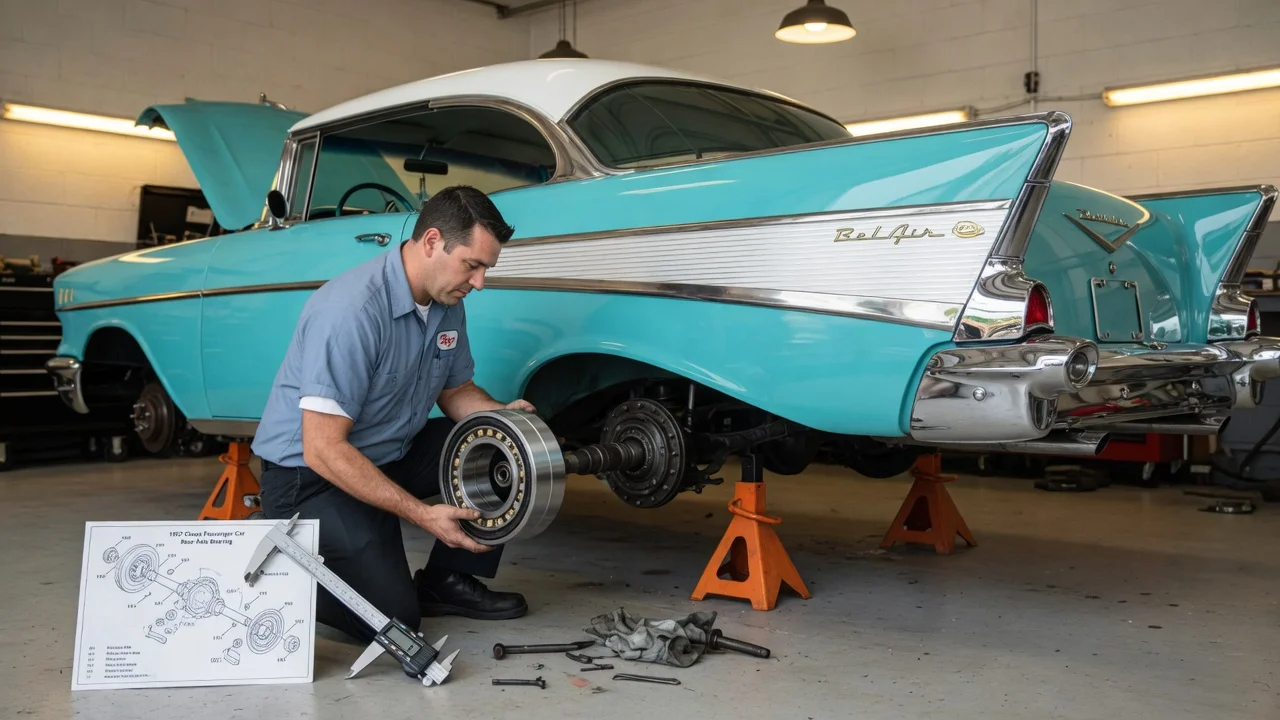
Ordering a rear axle bearing for a 1957 Chevy Bel Air sounds simple until you find out that the axle under the car may not be the one it left the factory with. Decades of repairs, gear changes and drivetrain upgrades mean the model year is only a starting point. This guide explains how the rear bearing is mounted, what changes the correct part, and how to confirm fitment before you press anything onto a shaft.
The short answer: match the axle, not just the year
To confirm fitment, first identify the axle assembly that is actually installed. Then match the bearing to that shaft and housing. If the car still has its factory-style banjo rear axle, a bearing cataloged for 1955 to 1957 Chevrolet full-size passenger cars is the logical starting point. Treat that listing as a lead rather than proof. The reliable confirmation comes from the old bearing itself: the part number stamped on it, plus measurements of the shaft journal and housing bore compared with the replacement's published dimensions.
The model year tells you very little if the rear end has been swapped, rebuilt with aftermarket shafts or modified at the housing ends. In that case you are buying a bearing for whatever axle is under the car, and the original Bel Air vehicle configuration no longer decides the part. Many of these cars have been through several owners and drivetrain changes. Checking before you order saves a return shipment and, more importantly, keeps you from pressing a bearing onto the wrong shaft.
How the rear bearing does its job
The 1957 Bel Air uses a semi-floating rear axle. Each axle shaft drives its wheel and also carries the weight of that corner of the car. The load passes through a single bearing near the outer end of the housing. On the factory-style design, the bearing is pressed onto the shaft and locked in place by a press-fit retaining ring. A retainer plate bolted at the end of the housing holds the shaft and bearing in position, and a seal keeps gear oil away from the brakes.
This arrangement means the bearing has to suit two parts at once. Its inner race must fit the shaft journal, and its outer race must fit the housing bore. The retaining ring and retainer plate also have to locate it correctly. A bearing that fits the shaft but sits loose in the housing, or one with a different width, can allow axle movement, seal leaks and early failure. Typical signs of a worn bearing include a hum or growl that rises with road speed and changes as the car is loaded in turns. You may also feel roughness when the wheel is spun by hand, or find gear oil on the brake drum and shoes.
What changes the right bearing
The biggest variable is whether the original axle is still there. Classic Chevrolets are often fitted with later GM rear ends or aftermarket housings to handle more power or to get different gearing. Those assemblies can use different bearings and different ways of retaining the shaft. One example is the C-clip design, where the bearing is pressed into the housing rather than onto the axle. Start by looking at the housing. The factory-style banjo unit has its gear carrier bolted into the front of the housing and no bolted inspection cover on the back. A cover on the rear of the housing points to a different axle family. A housing with no rear cover does not prove originality, though, because other removable-carrier designs share that layout. Continue to the bearing markings and measurements.
Other changes are less obvious. Replacement or aftermarket axle shafts may be machined for a specific bearing that differs from the factory part. In that case the shaft maker's specification takes priority over a year-based listing. A previous repair may also have involved a damaged journal or reworked housing ends. Optional equipment such as Positraction, or a different gear ratio, mainly affects the center section rather than the outer bearing. Still, a record of those changes in the service history shows the rear end has been opened and possibly altered. Operating conditions matter too. A car used for drag racing, or built with much more power than stock, may have been upgraded deliberately, and the bearing should match that upgrade.
How to confirm fitment before you order
Start with the paperwork. Receipts, a previous owner's notes or a shop invoice can identify the rear end and any bearing already installed. Next, inspect the housing as described above. For a firm answer, remove one axle. Take off the wheel and brake drum, remove the retainer plate fasteners, and pull the shaft out with its bearing; a slide hammer is often needed. Read the numbers stamped on the bearing and seal, and photograph them before you clean or cut anything.
Measure the shaft journal diameter, the housing bore and the old bearing's width with a caliper or micrometer. Compare them with the published dimensions of the bearing you intend to buy. Do not rely on a listing photo, because similar-looking bearings can differ in ways that matter. When ordering, give the seller the bearing number and your measurements. Buy the matching seal and a new retaining ring at the same time, since a retaining ring should not be reused. Many suppliers sell the bearing, ring and seal as a set for the factory-style axle.
Many bearing problems start during installation. The old ring is usually removed by grinding partway through it and then splitting it with a chisel, taking care not to nick the shaft. Avoid using a torch near the bearing area, because heat can weaken the shaft. Press the new bearing and ring on with a suitable press and support plates, so the load goes through the correct race. For the press-on procedure, the retainer torque and any end play check, follow the factory shop manual rather than generic figures.
Limitations and the next step
This guide cannot tell you which axle is under a particular car or give the dimensions of a specific bearing. Those answers depend on the car in front of you and on the manufacturer specifications for the parts involved. There is also no universal replacement interval for this bearing. On a car of this age, a practical maintenance schedule is to inspect it whenever the rear brakes are serviced, whenever a seal leaks, and whenever bearing noise appears.
Get professional help in any of these cases: the housing type is unclear, the bearing number is unreadable and your measurements fall between catalog sizes, or you have no access to a press. A driveline or differential shop can identify the axle, measure the parts and press the bearing on correctly. If you are doing the work yourself, the next step is to pull one shaft, record the bearing markings and measurements, and order against those details rather than the year alone.