15W-40 Diesel Engine Oil: Viscosity, Ratings, and Suitability
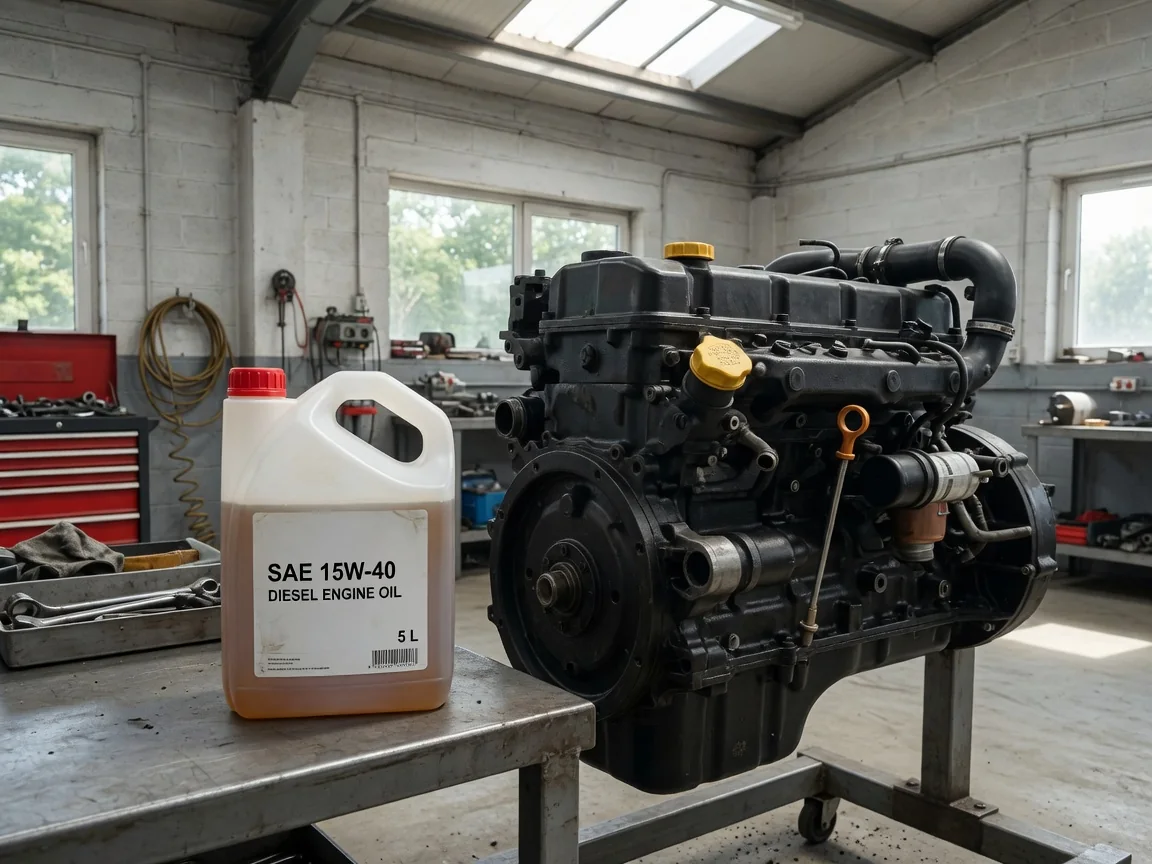
A jug labeled 15W-40 engine oil is a familiar sight at truck stops and parts counters, and it is usually sold as diesel engine oil. The grade number describes viscosity, but that is only part of what an engine needs. To decide whether a 15W-40 product suits a vehicle, owners also need to read the API service category next to it and check for any OEM oil approval.
What the 15W-40 Oil Grade Means
SAE 15W-40 is a multigrade viscosity designation within the SAE viscosity grade system. The 15W part is the winter viscosity rating. It means the oil passes standardized limits for cold cranking and low-temperature pumping under test conditions. The 40 is the viscosity range the oil must hold at a standardized high-temperature test point that represents normal operating temperature. A multigrade oil meets both requirements. It flows well enough during a cold start and still keeps a protective film between moving parts once the engine is fully warm.
The W stands for winter, not weight, and neither number is an outdoor temperature limit. Searches for 15w40 engine oil, engine oil 15-40w or 15 40w engine oil almost always mean the same grade, which is correctly written SAE 15W-40. Viscosity alone tells you very little else about the oil. It does not show whether the oil is made for diesel or gasoline engines, how strong its additive package is, which base oils it uses, or whether any engine manufacturer has approved it.
When SAE 15W-40 Fits an Engine's Requirements
The owner's manual is the first place to check whether engine oil SAE 15W-40 is allowed. Many manuals list the approved viscosity grades, sometimes with a chart matching each grade to an outdoor temperature range. Some engines allow 15W-40 across a wide range, some only in certain conditions, and some not at all. Cold starts matter because thicker oil takes longer to reach the bearings, cam surfaces and turbocharger shaft when the engine is cold. The manufacturer's temperature guidance decides where this grade is acceptable, not a universal cutoff.
Engine design and expected use shape the oil requirement, including bearing clearances, oil pump output, hydraulic valvetrain parts and piston cooling. Towing, hauling or long idling does not by itself justify switching to a heavier grade the manual does not list. An older vehicle or a high odometer reading is also not a reason to assume 15W-40 is right. Confirm the requirement for the exact engine and model year, because vehicles with the same model name can have different engines that call for different oil specifications.
Why Some Diesel Engines Specify 15W-40
Many heavy-duty and light-truck diesel engines allow or specify SAE 15W-40 diesel engine oil, but running on diesel fuel does not by itself decide the correct viscosity. Some diesel engines call for lower-viscosity grades instead. Whatever grade is specified, the oil has several jobs. It lubricates the bearings and valvetrain, carries heat away from pistons and turbochargers, keeps deposits suspended and holds a stable film under high cylinder pressure. Diesel engines often run for long hours under heavy load, which makes all of these jobs harder.
Diesel combustion produces soot and acidic byproducts, and some of both end up in the crankcase oil. Diesel oils handle this within their rated performance limits. Dispersants keep soot finely suspended so it does not thicken the oil or clump into abrasive particles. Detergents and alkaline reserve neutralize acids, and other additives resist oxidation. This is why diesel oil often turns black soon after an oil change. Dark color alone cannot show how much oil life remains, how contaminated the oil is or whether a different grade is needed.
Reading API CK-4 and Manufacturer Approvals
A bottle of SAE 15W-40 diesel engine oil usually carries several separate markings. The SAE grade describes viscosity only. The API service symbol, often called the donut, shows which oil service category the product claims to meet, such as CK-4. Engine-manufacturer approvals are listed by brand and specification number and show that the oil has passed that manufacturer's own requirements. Each marking answers a different question. Having the correct viscosity does not make up for a missing service category or a missing approval.
API CK-4 is a diesel oil performance category intended for high-speed four-stroke diesel engines. It covers requirements such as wear protection, oxidation control, soot handling and resistance to aeration. Before assuming CK-4 oil is suitable, confirm that the manual names CK-4 or accepts it for your engine. Emissions equipment, including the diesel particulate filter, makes the specified oil chemistry important, because ash-forming additives and oil consumption can affect aftertreatment parts over time. The 15W-40 marking alone cannot confirm that an oil is compatible with them.
Checking Whether a Diesel Oil Is Approved for a Passenger Car
Whether a 15W-40 engine oil belongs in a passenger car depends on what the vehicle documents require: the viscosity grade, the service category and any manufacturer specification. Some oils sold for diesels are dual-rated, meaning the API symbol also shows a gasoline category. That marking means the oil passed that category's tests, but it does not make the oil fully approved for a particular vehicle. Many gasoline cars call for thinner grades, and the category and approvals in the manual still have to match.
Passenger-car diesels need particular care. Their manufacturers often require specific oil approvals, and those approvals are usually tied to chemistry that protects the particulate filter and other emissions parts. An oil sold for diesel engines may not carry the approval a car needs, even if the viscosity looks familiar. Heavy-duty truck oil does not automatically give a car extra protection. If the specifications on the label do not meet the vehicle's requirements, the oil can fall short on filter compatibility, fuel economy or cold-start flow.
A Practical Check Before Buying or Topping Up
Before buying, check the label in order. First, confirm that the SAE grade is one the manual allows. Next, make sure the API category matches the required one or is accepted in its place. Then look for the specific manufacturer approval if the vehicle calls for one, and check any specification that applies to the emissions system. Terms like conventional, synthetic blend or full synthetic describe the base oil, but they do not replace the required viscosity and approvals. A full synthetic without the right approval is still the wrong oil.
When topping up, follow the manual's steps for checking the oil level. They cover whether the engine should be warm or cold and how long to wait after shutting it off. Add oil a little at a time to avoid overfilling, which can whip air into the oil and strain the seals. Switching to 15W-40 will not fix unexplained oil loss, an oil pressure warning or unusual engine noise. Treat these as symptoms: follow the manual's instructions for the warning and have a qualified technician find the cause.