10R80 Transmission Valve Body Identification
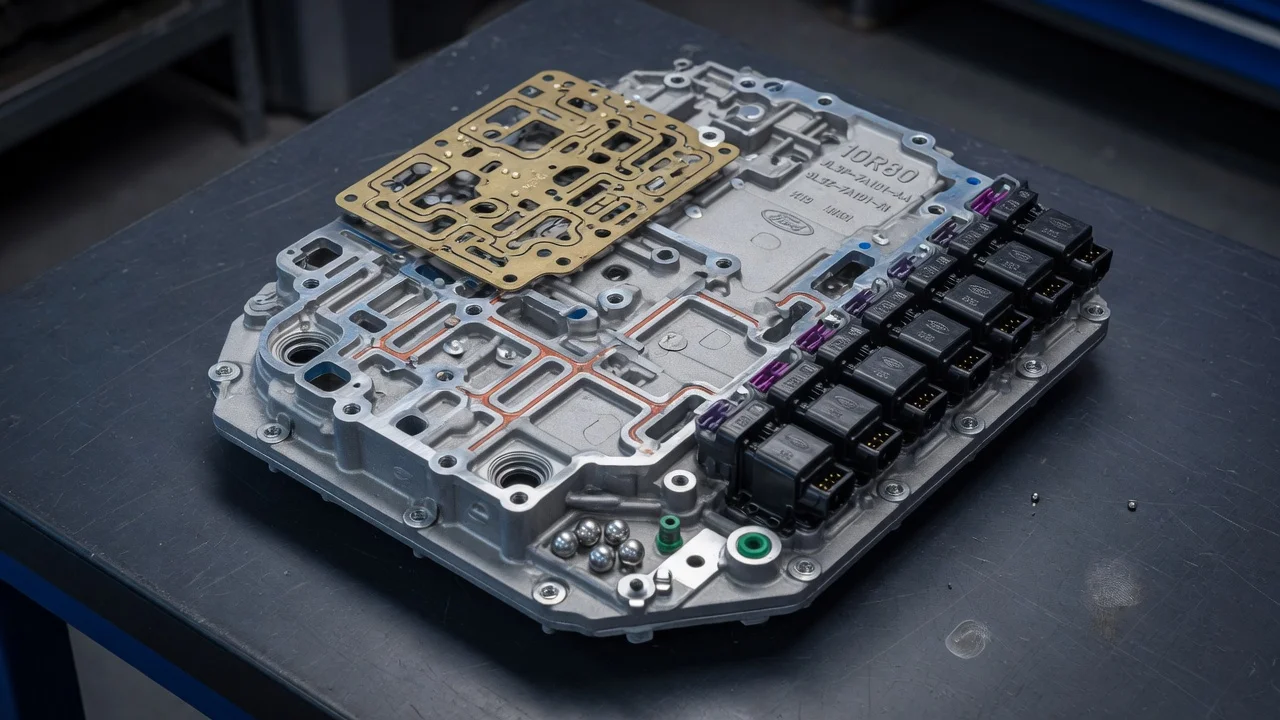
Identifying the valve body in a Ford 10R80 is less about finding one universal part and more about matching the exact transmission, model year and calibration in your vehicle. This 10-speed automatic is used in several Ford and Lincoln trucks, SUVs and performance cars, and its main control assembly was revised during production. This guide explains how to confirm which unit you have, why the details matter, and what to check before you buy parts or approve a repair.
The short answer on identification
The reliable way to identify a 10R80 valve body is to start with the vehicle, not the part. The VIN, the identification tag on the transmission case and the service part number from the manufacturer's parts catalog together tell you which main control assembly is correct. A label or casting mark on a removed valve body can help confirm a match, but it does not prove fitment on its own, because the revision level, the software calibration and any vehicle-specific programming also have to line up.
Before going further, confirm the transmission type itself. Ford builds more than one 10-speed: the lighter-duty 10R60 appears in some models, hybrid F-150 PowerBoost trucks use a modular hybrid version based on the 10R80, and General Motors uses its own 10L-series units that share the general architecture. Similar names and shared design history do not mean parts interchange, so treat each of these as a separate fitment question.
What the valve body does in this transmission
The valve body is the hydraulic control center of the transmission. It is a set of machined plates with fluid passages, spool valves and electronically controlled solenoids that route pressurized fluid to the clutches. The 10R80 produces its ten forward ratios with four planetary gearsets and six shift elements, so each shift depends on precisely timed pressure being applied to one clutch while another releases. The solenoids carry out commands from the transmission control module, and in this design the electronic controls are closely tied to the main control assembly. That is why replacing the valve body often involves programming rather than simply bolting in a part.
Because shift behavior depends on pressure control, adaptive learning and clutch condition all working together, very different problems can feel alike from the driver's seat. A sticking valve, a worn bore, a faulty solenoid, contaminated or low fluid, outdated software or worn clutch material can each produce harsh, delayed or flared shifts. The valve body is a common suspect, but a symptom alone does not confirm it has failed.
What changes the answer
Model year and revision level matter most. Ford updated 10R80 valve body and solenoid components over the production run, and older service part numbers may be superseded by newer ones. The vehicle and engine also matter: an F-150 with an EcoBoost engine, an F-150 with the 5.0-liter V8, a Mustang, an Expedition or Navigator, and a Ranger can carry different calibrations even when the hardware looks similar. Performance variants and hybrid versions add further differences.
Software and calibration are the second major variable. A replacement main control assembly typically has to be programmed to the vehicle, and the transmission usually needs an adaptive relearn afterward so shift timing can be relearned. A used valve body pulled from a salvage vehicle may look identical yet carry the wrong revision or calibration, which can leave you with poor shift quality or fault codes after installation.
Service history changes what you should expect to find. If the transmission has already had a valve body replacement, software updates or warranty work, the installed unit may not match the original build. Records from a dealer or previous owner can save time and prevent ordering a part based on outdated information.
What the owner can do
Start by gathering the basics: the full VIN, the information on the transmission identification tag if you can safely see it, current mileage and any service history. Then describe the shift behavior as specifically as possible. Note which gear changes feel wrong, whether the problem appears cold or hot, during light or heavy throttle, upshifts or downshifts, and whether it happens every time or only occasionally. Read diagnostic codes with a scan tool that can communicate with the transmission module; basic code readers may not show manufacturer-specific transmission codes or live data.
Check the fluid before assuming a hardware fault. The 10R80 is specified for a low-viscosity automatic transmission fluid, Mercon ULV, and using the wrong fluid specification can affect shift quality. On many applications the level is checked through a check plug at a specified fluid temperature rather than with a conventional dipstick, so follow the procedure for your vehicle. An incorrect level can mimic control problems. It is also worth asking a dealer whether any service bulletins or software updates apply to your VIN, since a calibration update is sometimes the first recommended step for shift complaints.
When comparing repair options, ask each shop which part number it plans to install, whether the unit is new or remanufactured, whether programming and the adaptive relearn are included, and what warranty covers the part and labor. Compare that part number with a VIN-based lookup so you know the unit matches your transmission rather than just your model name.
Limitations and next step
This guide cannot confirm the correct part number for your vehicle or diagnose a specific fault. Complaints such as harsh shifts in the lower gears overlap between valve body faults, fluid issues, software, wiring, sensors and internal clutch wear. Confirming the cause usually requires dealer-level diagnostic software, live data review and, in some cases, pressure testing, and installing a replacement main control assembly generally requires programming equipment that most owners do not have.
The practical next step is to get a VIN-based parts lookup from a dealer parts counter and a proper diagnostic scan before ordering anything. Buying a valve body based on symptoms alone risks paying for a part that does not fit, does not match your calibration, or does not address the actual problem.