10R80 Torque Converter Shudder Diagnosis
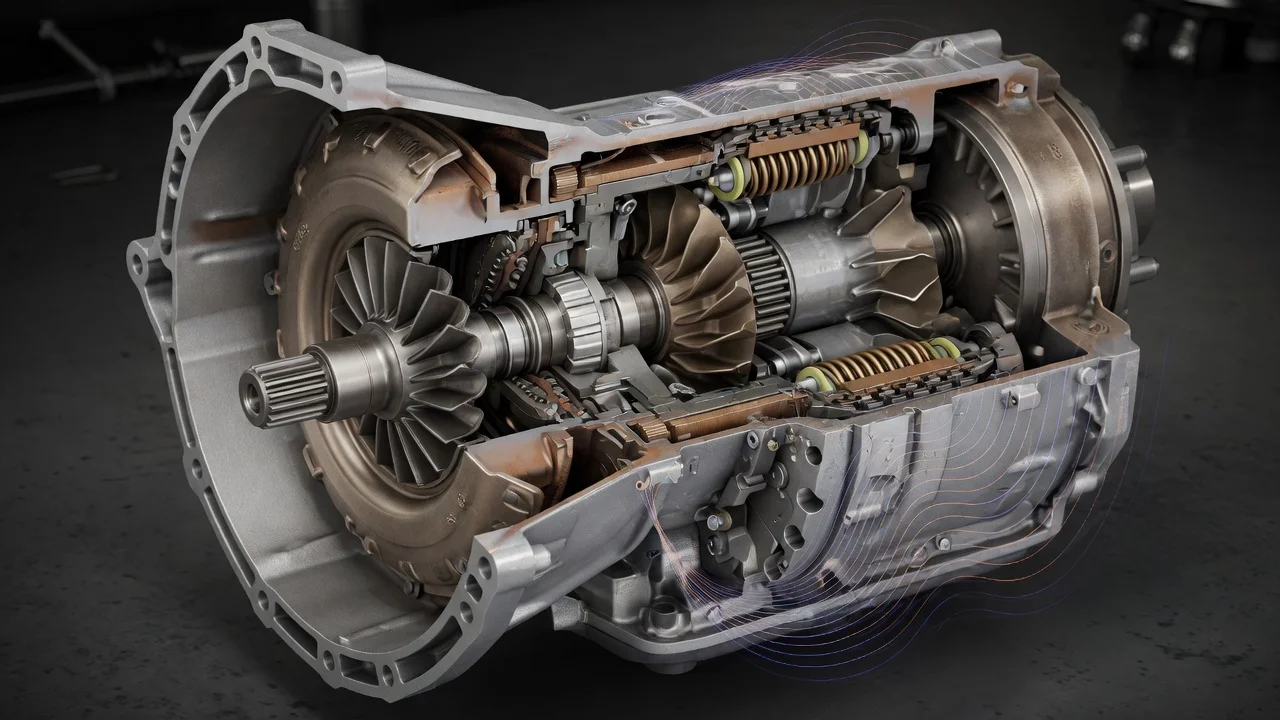
Torque converter shudder on a 10R80 usually feels like a brief vibration, similar to driving over rumble strips, at light throttle while cruising or gently accelerating. This 10-speed automatic is used in vehicles such as the Ford F-150, Expedition and Mustang, but engine, driveline and tire problems can produce a very similar sensation. This guide covers how to record the symptom, separate likely causes, order the checks and decide how urgently the vehicle needs attention.
Establish the symptoms
Start by confirming the transmission type. Build information tied to the VIN, the owner's manual or the transmission identification tag will show whether the vehicle has a 10R80 rather than a related unit such as the 10R60 or GM's 10L-series, which share design roots but differ in calibration, service procedures and sometimes fluid specification. Hybrid versions use a modified transmission package with their own diagnostic path. Note the engine, two- or four-wheel drive, tow package and any changes to tire size or ride height, because these affect both diagnosis and parts fitment. Ford specifies Mercon ULV fluid for the 10R80; confirm the requirement for your exact vehicle in its service information.
Then log when the vibration happens: road speed, gear if the display shows it, throttle position, engine temperature, load, towing and road grade. Record whether it lasts a second or continues, whether you feel it through the seat and floor or mainly the steering wheel, and whether a light change in throttle makes it disappear. Note related signs such as harsh, delayed or busy shift behavior, flare between gears, warning lights or messages. Finally, list recent changes: fluid service, software updates, battery disconnection that may have reset adaptive learning, new tires, a lift kit, driveshaft work or an aftermarket tune.
Distinguish plausible causes
Converter clutch causes include degraded or contaminated fluid that has lost its friction properties, the wrong fluid, an incorrect fluid level, problems with the converter clutch control solenoid or valve body, wear of the clutch inside the converter, and calibration or adaptive issues. Observations that support a converter clutch problem are vibration in a narrow speed band at light throttle, vibration that appears as lockup engages or while the clutch is being controlled with partial slip, and vibration that stops with a small throttle increase or when lockup releases.
Competing causes behave differently. An engine misfire often appears under load, may be felt at idle or while stopped in gear, and frequently sets misfire codes. Driveline vibration from driveshaft imbalance, worn U-joints or changed driveline angles after a lift tends to follow vehicle speed regardless of throttle or lockup state. Tire and wheel problems are also speed-related, are often felt in the steering and continue while coasting. Worn engine or transmission mounts typically show up during load changes. Vibration that persists with lockup clearly released, or that exists at idle, weakens the converter explanation.
Harsh or erratic shifts may accompany shudder, and both can share a cause such as fluid condition or calibration. They can also arise separately, so record each symptom on its own rather than assuming one fault explains everything.
Checks in a useful order
Begin with safe observations. Note any warning lights and read stored diagnostic codes with a basic OBD-II reader. Generic codes such as P0741 or P2757 relate to converter clutch performance or its pressure control, while P0300-series codes indicate misfires; manufacturer-specific transmission codes may need a more capable scan tool. Look for fluid leaks, check tire pressures and visible tire wear, and gather your service history. A dealer can also check by VIN for open recalls, service bulletins or available software updates.
On many vehicles, lightly pressing the brake pedal just enough to turn on the brake lights commands the converter clutch to release. If the shudder stops while you hold speed this way, that points toward the converter clutch circuit. Only try this on an empty road where slowing is safe, and treat the outcome as supporting evidence rather than a conclusion.
Several tests need tools, specifications or a qualified technician. A scan tool with transmission data can display commanded converter clutch state, clutch slip calculated from engine and turbine speed, pressure commands, fluid temperature and misfire counters during a road test. The 10R80 fluid level is checked by a specific procedure at a specified fluid temperature, and many applications lack a conventional dipstick, so guessing at the level risks overfilling or underfilling. Fluid condition inspection, driveline inspection on a lift, software level confirmation and an adaptive relearn are also technician tasks.
Interpret the findings
If logged data shows converter slip fluctuating while the clutch is commanded on, the fluctuation matches the vibration and misfire counters stay clean, the case for a converter clutch apply problem becomes strong. That result still does not separate fluid condition from a solenoid, valve body or converter fault. Dark or burnt-smelling fluid, the wrong fluid type or an overdue service supports a fluid-related cause. Metallic debris suggests internal wear and calls for deeper inspection before any lighter remedy is relied on.
If the vibration continues while the clutch is released and slip is steady, the converter is less likely to be the source, and driveline, tire or engine checks should come next. Diagnostic codes direct testing but do not confirm a failed part: a converter clutch performance code can result from fluid, hydraulic, electrical or converter faults and requires pinpoint tests. Because replacing the converter means removing the transmission, confirm fluid level and type, software status, adaptive learning and solenoid or valve body function first, and verify that any replacement part matches the exact transmission and vehicle.
Urgency and next action
Stop driving and arrange inspection or towing if you notice slipping, loss of drive, a flashing warning or reduced-power mode, an overheating message, a burning smell, an active fluid leak, loud mechanical noise or severe vibration. Mild, intermittent shudder without those signs still deserves prompt diagnosis, because repeated slipping generates heat that can degrade fluid further. There is no reliable safe remaining mileage, and heavy towing or hauling is best avoided until the cause is identified.
Give the shop the VIN, model year, engine, drivetrain, mileage, tire size and any modifications, plus service history including fluid changes, the fluid used and software updates. Add stored codes with freeze-frame data if available, your log of conditions and any video or data recordings. Repair options range from a correct fluid exchange and software update with adaptive relearn to solenoid, valve body or converter replacement; ask which test result supports the recommended repair before approving it.