10L1000 Transmission Valve Body Identification
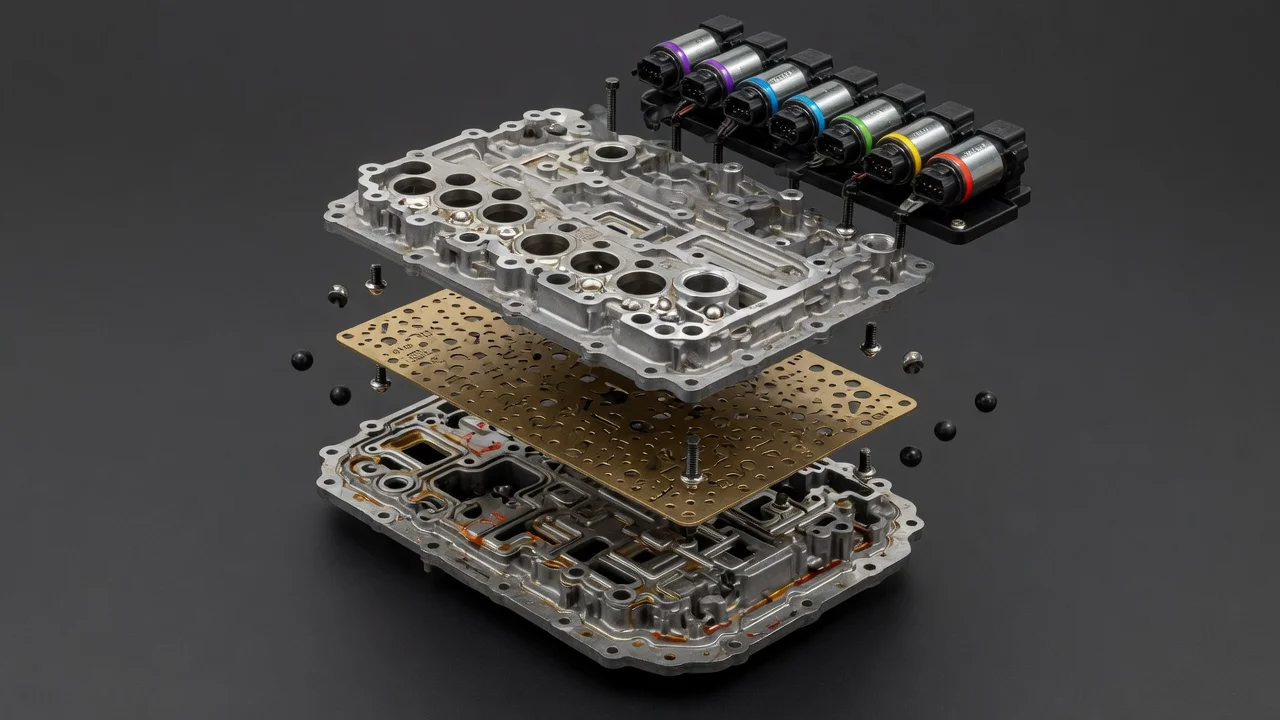
Identifying the valve body in a 10L1000 transmission is less about reading a single casting number and more about matching the complete assembly to your specific truck. The 10L1000 is a heavy-duty ten-speed automatic. Its valve body works together with solenoids, sensors and control software. This guide explains how to confirm which unit is installed, what affects fitment, and how to prepare for an informed repair decision.
Short answer: identify the vehicle first, then the assembly
The reliable way to identify a 10L1000 valve body is to start with the vehicle, not the part. Confirm the transmission type from the build information. That means the VIN, the service parts identification label with its option codes, and the identification tag or label on the transmission case. Those details establish which hardware and calibration the truck had when it left the factory. Next, read the part number on the valve body or control assembly, if it is visible. Compare it with the replacement you are considering. Two assemblies can look identical on a bench and still differ in internal valves, springs, sensors or software. Visual similarity is not proof of fitment.
Valve body identification answers a parts question, not a diagnostic one. Knowing exactly which unit is installed is useful before ordering. It does not confirm that the valve body caused a shifting complaint. A symptom can point toward the valve body without proving that part has failed.
How the valve body controls a ten-speed
The valve body is the hydraulic control center of the transmission. It is a machined housing with a network of fluid passages, spool valves, check balls and a separator plate. The pump supplies pressurized fluid, and the valve body routes it to the clutches that create each gear. Electronically controlled solenoids adjust the pressure for every clutch application and release. A ten-speed reaches its ratios through combinations of several clutches, so the overlap between one clutch releasing and another applying must be timed precisely. The control module reads speed sensors, throttle input and fluid temperature. It then commands the solenoids to produce the shift.
On many modern GM automatics, the solenoids, pressure sensors and transmission control module are combined into one assembly mounted on the valve body. Where that applies, the replacement part may be a combined electro-hydraulic unit rather than a bare valve body. That unit normally has to be programmed or configured for the vehicle, followed by a relearn of the shift adaptations. Verify the exact arrangement for your truck before assuming either layout.
What changes the identification and fitment
Several factors can change which valve body is correct even when the transmission name is the same. These include model year and production changes, engine pairing, drivetrain configuration, and service updates that supersede earlier part numbers. A diesel and a gasoline application may use different calibrations, and they may also use different internal hardware. Remanufactured assemblies can carry their own labels and numbers, which may not match the original factory part. For these reasons, a part listed only as fitting the 10L1000 is not enough. Fitment should be confirmed against the VIN.
Software is the second half of fitment. When the control module is integrated with the valve body, the calibration is tied to the vehicle. A used assembly taken from another truck may contain incompatible software or security settings. It may need dealer-level programming, or programming with an equally capable tool, before it works correctly. Aftermarket or modified valve bodies built to change shift feel are a separate category. They can alter how the transmission behaves and may affect warranty coverage, so discuss that choice with your repair shop before buying.
Checking your truck before ordering parts
Start by collecting the VIN and the service parts identification label, which GM vehicles commonly carry in the glove box. Then look for the identification tag on the transmission case. It may be dirty or hard to reach, so photograph it once it is clean. Have the stored diagnostic codes read with a capable scan tool, including freeze-frame data where it is available. Record whether each code is current or historical. Check the fluid level and condition using the manufacturer's procedure. On many modern transmissions this check depends on temperature and may not use a traditional dipstick.
Write down the shift behavior in specific terms. Note harsh or delayed engagement into drive or reverse, flare or slipping between particular gears, shudder, and whether the problem appears only when the transmission is cold or hot. Gear-specific patterns help a technician separate a solenoid, valve body, clutch, sensor or wiring fault. Gather the service history as well, including fluid changes, software updates, reprogramming and earlier repairs. Confirm that any added or replacement fluid meets the exact fluid specification in your owner's manual. The wrong fluid can change how the transmission shifts.
Repair options depend on what the diagnosis shows. Depending on the findings, a shop may recommend a software update, an adaptive relearn, or repair of a wiring harness or connector. Other outcomes include replacing the control and solenoid assembly, replacing the valve body, or overhauling the transmission. Metal or friction debris in the pan points to internal wear that a new valve body will not fix. That debris can also contaminate and damage a freshly installed replacement.
Limits of a do-it-yourself identification
Owner-level checks have real limits. Labels can be missing, unreadable or replaced, and a transmission may have been swapped or rebuilt at some point in the truck's life. Parts catalogs also change as numbers are superseded. This guide does not list part numbers for that reason. A dealer parts department or an established transmission supplier working from your VIN is the dependable way to confirm the correct assembly and its programming requirements.
Get professional help if codes return after clearing, if the truck enters a reduced-power or limited-gear mode, if the replacement needs programming, or if the fluid shows debris or a burnt smell. Bring your VIN, the recorded codes, your notes on shift behavior and the service history. That gives the technician what they need to confirm the diagnosis before any parts are ordered.