1.6 HDi Glow Plug Relay Location: Where to Find It
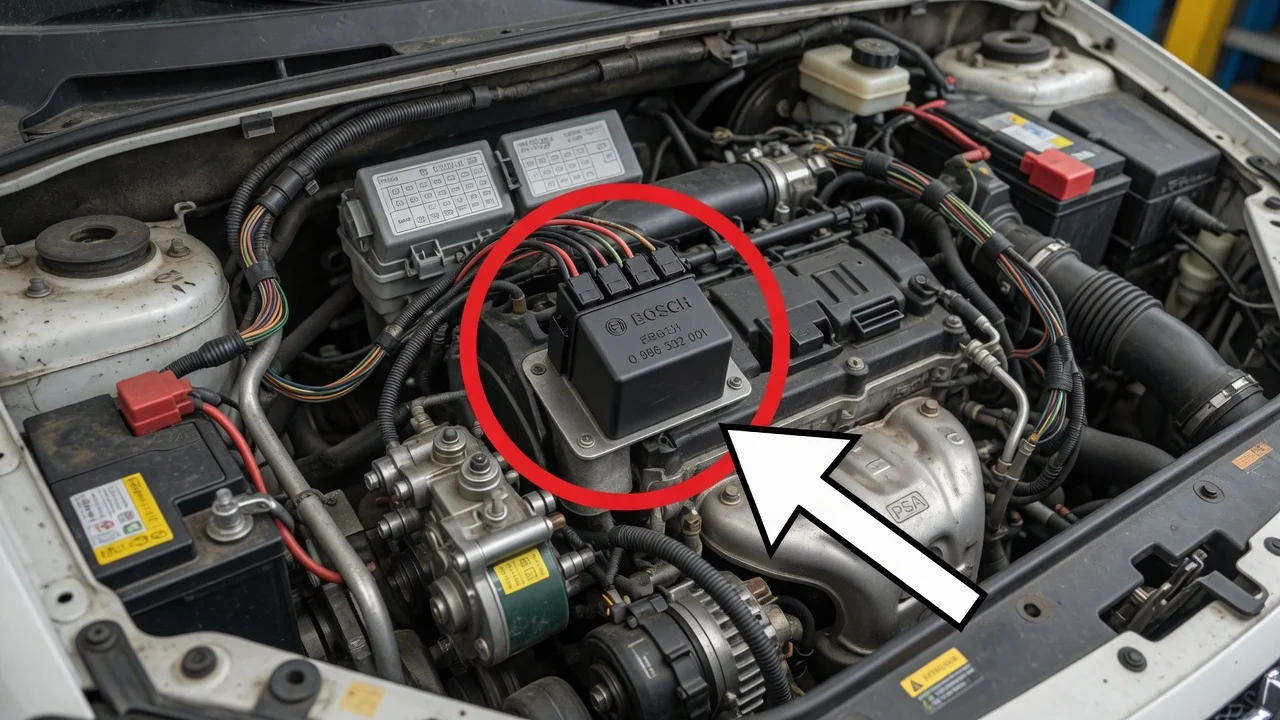
If your 1.6 HDi is slow to start from cold or shows a glow plug warning, the preheat relay is one of the first parts to check. On these engines it is usually a separate control unit in the engine bay, not a relay in the fuse box. Its exact position depends on the vehicle and engine version. Below is where to look, how the system works, and how to inspect it without disturbing the high-pressure fuel system.
Where the glow plug relay is on a 1.6 HDi
On the 1.6 HDi, what owners call the glow plug relay is normally a dedicated preheat control unit rather than a plug-in relay in the fuse box. In most installations it is a small sealed box bolted to the body or to a bracket in the engine bay. It has a heavy power feed, a multi-pin connector from the engine computer, and an output harness running to the four glow plugs. It is commonly mounted on the gearbox side of the bay, near the battery, battery tray or air filter housing. On some versions it is tucked under intake ducting or close to the bulkhead.
On the Peugeot 308 1.6 HDi, owners usually find the unit in that battery and air intake area. It is often partly hidden, so the air filter housing or intake pipe has to be moved to reach it. Positions differ between model years and engine versions, so treat this as a place to start looking, not a guaranteed spot. The dependable way to confirm it is to follow the glow plug wiring from the cylinder head back to the box where it ends.
How the preheat system works
A diesel relies on the heat of compression to ignite its fuel, and a cold engine loses much of that heat into the surrounding metal. Glow plugs sit in the cylinder head beside each injector and heat the combustion chamber so the fuel the injector sprays lights reliably. The engine computer decides how long to preheat, using coolant temperature and other inputs, and sends a command to the preheat unit. The unit then switches the high current the plugs need, which is far more than the computer's own circuits could carry.
Many versions also keep the plugs energized for a while after the engine starts. This steadies the idle and reduces white smoke and knocking while the engine warms. The preheat unit can usually report circuit faults back to the computer. That is why a failing plug or unit often produces a stored fault code and a flashing or lingering glow plug warning. On a warm engine the system may skip preheating entirely, so a brief or absent warning light in that situation is normal.
What changes the location and design
The 1.6 HDi name covers several generations, including earlier 16-valve and later 8-valve versions built for different emission standards. The same engine family was also fitted to vehicles from other brands under different names. Engine configuration, the battery and air filter layout, left- or right-hand drive, and the body style all influence where the preheat unit ends up. Later units may also use different connectors and communicate with the engine computer differently. A replacement must match the exact part listed for the vehicle, not just look similar.
Previous repairs can change things too. An aftermarket replacement unit, a relocated bracket or a modified harness may not sit where a parts diagram shows. If the vehicle has had engine or wiring work, go by where the wiring actually leads rather than by a picture.
How to find and check it safely
Start with the engine off and cool, and disconnect the battery before unplugging anything. The preheat unit carries a large current, and on many vehicles its power cable is permanently live. Remove the engine cover and, if needed, the intake pipe or air filter housing for access. Find the glow plug feed wires at the top of the cylinder head and follow them to the unit. Check its connectors and mounting, and look for corrosion, melted insulation or signs of water entry. Loose or corroded terminals are a common and easily overlooked cause of preheat faults.
Take care around the fuel system. The injectors and their high-pressure lines sit right beside the glow plugs. A common-rail system holds very high fuel pressure while running and can retain pressure after shutdown. Do not loosen injector lines, the rail or fuel filter fittings to gain access or to release pressure. That is not part of a glow plug job, and diesel escaping at that pressure can cause serious injury. A visual leak check for wet fuel around the injectors and lines is reasonable, but any fuel-side work belongs with a qualified diesel technician.
If you have a scan tool and a multimeter, read the stored fault codes first. Then measure each glow plug's resistance with its feed disconnected, and compare the readings with each other and with the specification for your engine. A plug that reads as an open circuit is clearly faulty. Before condemning the unit, confirm whether it actually sends voltage to the plugs during preheat.
Telling a preheat fault from a fuel problem
A preheat fault mainly shows up when the engine is cold: hard or slow starting, rough running and white smoke for the first moments, and a warning light that flashes or stays on. Once warm, the engine usually starts and runs normally. Problems that persist when hot point elsewhere. Low fuel pressure from a weak fuel pump or a blocked fuel filter, air leaking into the supply, or worn injectors can all cause long cranking and misfires at any temperature. A scan tool can show rail pressure during cranking and injector correction values, which separate these causes far better than guessing.
Fuel additives are sometimes promoted for hard starting, but they are not a proven fix for a failed glow plug, a faulty preheat unit or a mechanical fuel fault. Use the correct diesel grade, especially winter diesel in cold climates, and diagnose the actual cause.
Limitations and next step
The locations described here reflect common layouts, not a specification for every vehicle. Your exact model, year and engine code determine where the preheat unit sits, which part number fits, and which resistance and voltage values apply. A parts catalog lookup by VIN or the workshop information for your car is the authoritative reference.
Get professional help in three situations. First, if glow plugs are seized in the head, because a snapped plug can turn into a major repair. Second, if fault codes persist after you replace parts. Third, if there is any fuel leak or smell, or the job involves a high-pressure component. A diesel specialist with the right diagnostic software can test or configure the preheat unit and check the fuel system without opening it.