0W-20 Engine Oil: Why Modern Cars Use It
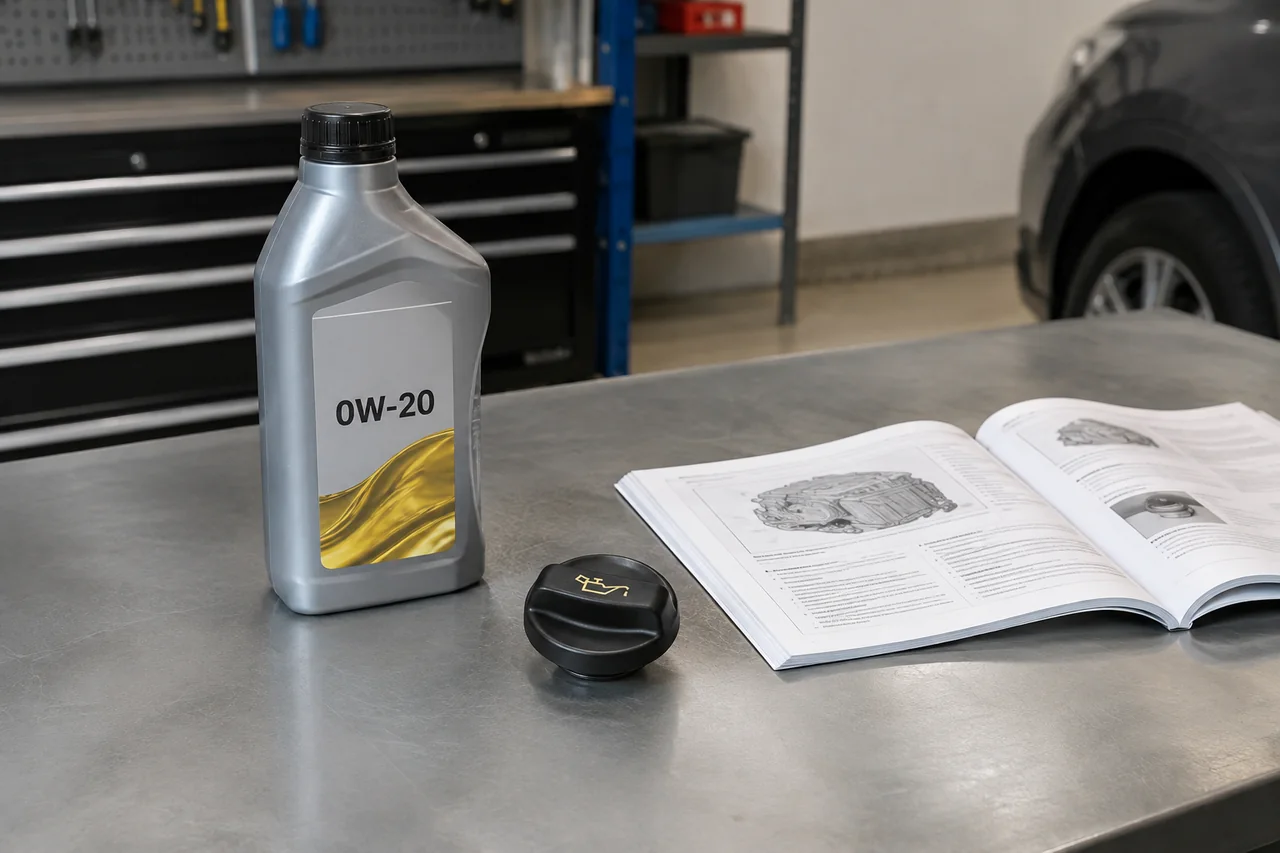
Open the hood of many late-model cars and the oil cap or owner's manual may call for 0W-20, a grade that looks almost watery next to the oils older engines used. It's thin on purpose. If you know what the numbers mean, why engineers choose this grade and how to confirm your vehicle's requirement, you can buy the right oil and avoid changes that work against the engine's design.
What the 0W-20 Viscosity Grade Means
SAE 0W-20 is a viscosity grade under the SAE engine oil grading system. It tells you how the oil flows within set test ranges. It isn't a brand, though, and on its own it says nothing about the detergents, the anti-wear additives or the certifications an engine may require. Two bottles labeled 0W-20 can have very different formulas and approvals. You need the right grade to match the engine, but the grade is only part of what makes an oil correct.
The number before the W is the winter rating. It comes from lab tests of how easily the engine cranks and how readily the oil pumps at low temperatures, and 0W is the lowest winter grade, meaning the best cold flow on that scale. The 20 is the high-temperature grade, which reflects viscosity near normal operating temperature. Neither number is an outdoor temperature limit, and all oil thins as it heats and thickens as it cools. The correct written form uses the number zero, but "OW-20" refers to the same grade.
Why Manufacturers Design Engines to Use 0W-20
Engineers choose a viscosity as part of the whole engine design. At a cold start, oil has to travel quickly from the pan to the bearings, camshafts and valvetrain, and a thinner grade gets there sooner. Once the engine is warm, the oil still has to hold a protective film under load. A lower viscosity also cuts the internal drag of pumping and churning oil, which helps manufacturers meet fuel-economy targets. The chosen grade balances all of these needs rather than maximizing any single one.
Bearing clearances, oil pump capacity and passage sizes are all designed around the flow and oil pressure of the specified grade. Many modern engines also use oil as a hydraulic fluid for variable valve timing actuators, chain tensioners and other oil-operated systems, and these are set up to respond predictably. Still, being thin doesn't make an oil suitable. Protection comes from the correct grade combined with the required performance standards. And 0W-20 is meant for engines whose manufacturer permits it, not for every modern vehicle.
Checking 0W-20 Requirements for Toyota and Honda Engines
Certain Toyota and Honda engines call for 0W-20 because they were designed around its cold flow, fuel savings and hydraulic behavior. That doesn't mean either brand has one oil requirement for every vehicle. Requirements can vary by engine family, model year and market, and between hybrid and conventional powertrains. Some vehicles list a different grade or allow alternatives. The owner's manual for your exact model year, engine and sales region is the authoritative source, including any restrictions for towing, extreme climates or other demanding conditions.
The oil filler cap is often printed with a viscosity grade, which makes it a handy reference when you top up. But the cap can't tell you which certifications, approvals or operating-condition notes apply. Use it as a reminder and treat the manual as the full requirement. The cap, manual and past service records may disagree, for example because the cap was replaced or a shop used a different grade. If they do, ask a dealer service department or the manufacturer for guidance based on your vehicle identification number before choosing an oil.
When Full Synthetic 0W-20 Is Required
Viscosity and formula are separate questions. The 0W-20 grade describes how the oil flows. The base oils and additive package determine how well it resists breakdown, controls deposits and prevents wear. Performance certifications, such as an API service category or ILSAC standard, and any manufacturer approvals show that the oil passed defined tests. So the 0W-20 label doesn't by itself mean full synthetic is required. Some manufacturers specifically call for it, while others focus on grade and certification, so check your vehicle's instructions.
When you shop, read both the front and the back of the container. Confirm the viscosity grade, look for full synthetic wording if your manual requires it, and find the API or ILSAC designation your manual lists, which is usually shown in the certification symbols. If the manufacturer names a specific approval, the bottle should state it clearly. A "full synthetic" label doesn't guarantee that an oil meets every requirement for your engine. It has to match each item your manual lists, not just the biggest claim on the front.
What to Check Before Changing the Specified Oil Grade
Some drivers consider switching to a thicker oil, such as 5W-30, believing it adds protection. That's only appropriate when the manufacturer's guidance for your specific vehicle explicitly allows the other grade, sometimes only under certain conditions. Hot weather, high mileage or a louder engine doesn't by itself justify a different viscosity. The specified grade was chosen with expected operating temperatures in mind. The manufacturer's guidance for your vehicle, not general beliefs about older engines, decides whether another grade is acceptable.
An unapproved grade can change how quickly oil circulates after a cold start and how pressure-driven parts like variable valve timing behave. It can also make the engine run differently from how it was designed to run. Damage isn't guaranteed, but the engine is no longer running the way it was tested. If you notice oil burning, leaks or a persistent noise, treat them as symptoms to diagnose. Switching grades can hide useful clues without fixing a worn seal, a failing part or some other underlying cause.
Using 0W-20 and Recognizing Problems That Need Attention
Check your oil level the way your owner's manual describes. Vehicles differ on whether the engine should be warm or cold, how long to wait after shutting it off, and whether you read a dipstick or an electronic display. Park on level ground and let hot parts cool enough to work around safely. A low reading means you need to add the correct oil and find out why it dropped. It shows a shortage of oil, not a sign that the wrong viscosity was chosen.
Keep a simple record of top-up dates, amounts and mileage, plus any leaks you see and any dashboard messages. That gives a technician useful evidence. If an oil-pressure warning stays on, stop safely, shut off the engine and arrange assistance instead of driving on. The warning alone can't tell you whether viscosity is the cause. For oil changes, follow your maintenance schedule and the driving conditions it describes, such as severe service. Using synthetic oil isn't a reason to go longer than the manufacturer specifies.