01M Transmission Valve Body Identification
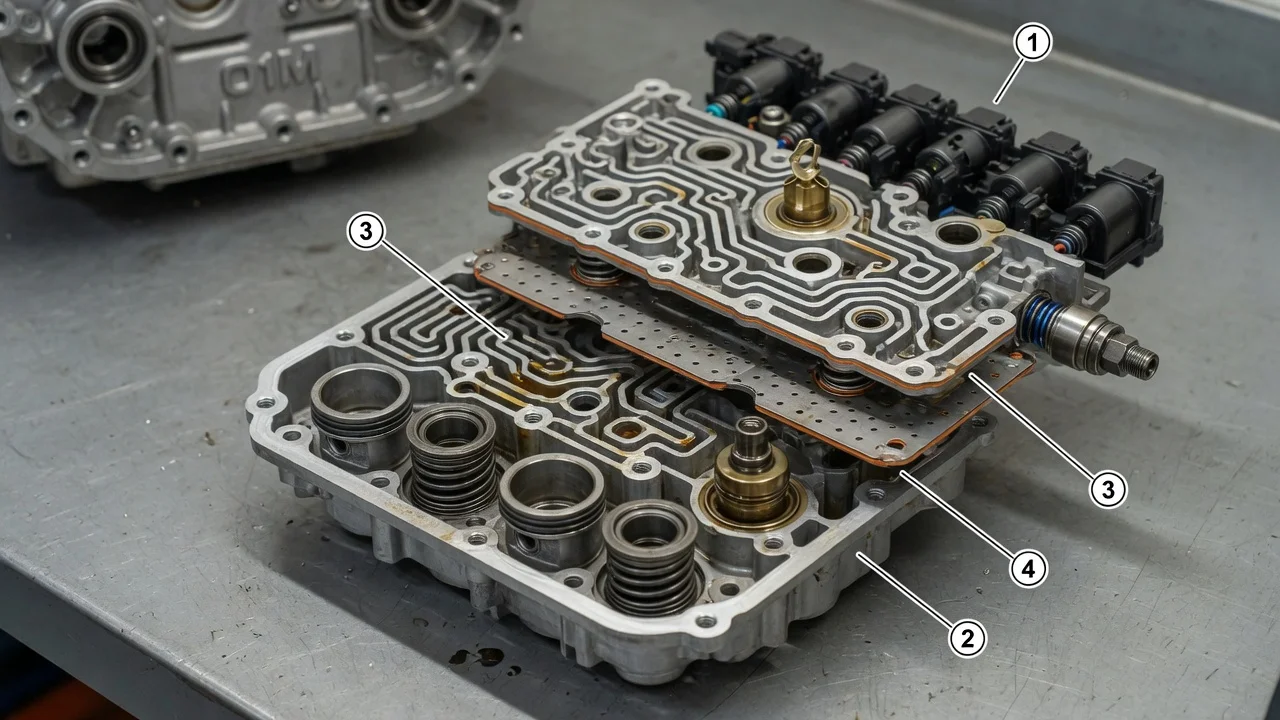
The 01M is a four-speed automatic used in transverse front-wheel-drive Volkswagen models from the mid-1990s into the 2000s, including versions of the Golf, Jetta and New Beetle. Its valve bodies can look almost identical from one unit to the next while differing internally. Fitting the wrong one, or replacing a good one because of a misread symptom, wastes money. This guide explains how to identify the valve body your transmission actually needs and what to confirm before you buy or replace anything.
How to identify the correct 01M valve body
Identification starts with the transmission rather than the valve body. Every 01M carries a transmission code stamped on the case, and the same code normally appears on the vehicle data label that Volkswagen placed in the vehicle or in the original service booklet. That code, together with the model year, engine and the vehicle identification number, defines which valve body version was fitted at the factory. The valve body itself carries a part number marking on its casting or on an attached tag. Matching that number, or a documented supersession of it, to your transmission code is the most reliable way to confirm fitment.
Two qualifications apply. First, appearance is not proof: bodies from different applications can share the same outline and bolt pattern but use different valves, springs or calibration. Second, identifying the part does not mean the part has failed. A valve body is one of several possible causes behind poor shift behavior, so identification and diagnosis are separate steps.
What the valve body does inside the 01M
The valve body is the hydraulic control center of the transmission. It sits at the bottom of the unit under the oil pan and receives pressurized fluid from the pump. Machined passages and spool valves inside it route that fluid to the clutches and brakes that produce each gear. Electrically operated solenoids mounted on the valve body open and close circuits and regulate line pressure on commands from the transmission control module, which bases its decisions on vehicle speed, throttle position, engine load and fluid temperature.
Because the hydraulic hardware and the control module work as a pair, a valve body has to suit both the mechanical transmission and the electronic calibration. Wear in valve bores, sticking valves, debris, weak solenoids or damaged internal wiring can all upset pressure and timing. The same symptoms, however, can come from low or degraded fluid, external wiring faults, a control module problem or worn friction components, which is why the valve body should not be blamed by default.
Factors that change which valve body fits
Several variables affect fitment. Engine pairing matters, because transmissions behind different gasoline and diesel engines were calibrated for different torque and shift characteristics. Model year matters, because Volkswagen revised the 01M during its production run, and later parts may carry updated part numbers that supersede earlier ones. The transmission control module and its software version also matter, since a valve body intended for a different calibration may produce harsh or delayed shifts even if it bolts in perfectly.
Service history can change the answer as well. A transmission that has been rebuilt, swapped from another vehicle or replaced with a remanufactured unit may no longer match the original data label, and its valve body may have been changed independently. Related Volkswagen four-speed automatics share design ideas with the 01M, but shared appearance does not make their valve bodies interchangeable. When the case code, the data label and the valve body marking disagree, treat the transmission that is physically installed as the reference and verify its history before ordering parts.
Practical steps for the owner
Begin by recording information. Photograph the transmission code on the case, note the code on the vehicle data label if it is still present, and write down the engine, model year and VIN. If the oil pan has been removed for service, photograph the valve body markings as well. Gather any service history you have, including fluid changes, previous rebuilds or transmission replacements, because this explains mismatches between labels and hardware.
Next, collect diagnostic evidence before buying parts. Read stored diagnostic codes with a scan tool that can communicate with the transmission control module, not only the engine module. Note the shift behavior in detail: which shifts are harsh, slipping or delayed, whether the problem changes when the transmission is cold or hot, and whether the car drops into a fixed-gear emergency mode. Check fluid level and condition using the correct procedure for this transmission, which is done through a check plug at a specified fluid temperature rather than with a dipstick, and use the fluid specification listed in the service information for your vehicle.
If a replacement valve body is justified, ask the seller for clear photographs of the part number marking and confirm the source application by transmission code and year. Clarify whether solenoids and the internal wiring harness are included and whether a used unit was cleaned and tested. A clean, matched part installed with a fresh filter and correct fluid gives the repair a fair chance.
Limitations and when to get professional help
Part number matching confirms fitment, not condition, and a symptom list does not confirm which component has failed. Proper diagnosis may require reading live data, testing solenoid circuits against factory specifications, checking control module software and measuring line pressure, which calls for vehicle-specific service information and the right equipment. If friction material or other internal parts are already worn, a new valve body will not restore normal operation, and metal debris in the pan usually points to a larger problem.
When codes are inconclusive, labels do not match the installed hardware, or the fluid shows heavy contamination, a transmission specialist familiar with Volkswagen automatics is the sensible next step. They can compare repair options such as solenoid or harness repair, valve body replacement, a full rebuild or a remanufactured transmission, and recommend the one that fits the actual fault rather than the most likely guess.